
An office cleaning checklist turns "keep the office clean" into tasks someone can actually do, check and be held to. Without one, the visible jobs get done and the rest quietly slips: skirtings, vents, the inside of the fridge, the carpet that hasn't been deep cleaned in two years.
This checklist sets out the tasks most commercial offices need, grouped by how often they're usually done. Use it to review your current cleaning, brief a new contractor, or build a written scope of works that every supplier can quote on the same basis.
How to use this checklist
Every office is different. A 10-person professional office and a 200-person multi-floor tenancy need very different schedules, so treat the frequencies below as a starting point, not a rule.
- Set frequency by use, not floor area. Washrooms and kitchens get the heaviest use and usually need the most frequent cleaning.
- Mix frequencies across one site. Washrooms can be cleaned daily, workstations weekly and carpets every six or twelve months. Write the frequency against each area.
- Separate routine and periodic work. Periodic tasks are easily forgotten when they're folded into the regular visit. List them separately, with a month against each one.
- Agree what staff do. Cleaners work best with a clear-desk policy. Decide who handles dishes, fridge clear-outs and personal equipment.
How often should an office be cleaned?
There is no single right answer. It depends on headcount, opening hours, visitors and how the space is used.
| Cleaning frequency | Usually suits |
|---|---|
| Daily (5 times a week) | Higher-occupancy offices and public-facing reception areas |
| 3 times a week | Mid-sized offices with moderate foot traffic |
| Weekly | Smaller professional offices and low-occupancy sites |
| Fortnightly | Part-time or hybrid workplaces |
| Periodic only | Sites with in-house day cleaning that need scheduled deep cleaning |
Even in a lightly used office, washrooms and kitchens usually need more frequent attention than desks and meeting rooms. Employers also have duties to provide and maintain workplace facilities. In Victoria, WorkSafe's compliance code on workplace facilities and the working environment gives practical guidance, including on how to maintain, clean and monitor workplaces.
Daily office cleaning checklist
These tasks keep the office hygienic and presentable day to day.
Washrooms
- Toilets, urinals, basins and tapware cleaned and disinfected
- Mirrors cleaned
- Toilet paper, hand towel and soap checked and restocked
- Sanitary bins checked and serviced as arranged
- Waste bins emptied and liners replaced
- Floors mopped
- Door handles, flush plates, taps and switches wiped
Kitchens and tea points
- Benchtops, sinks and splashbacks cleaned
- Tables and chairs wiped
- Appliance exteriors wiped: fridge, microwave and dishwasher fronts
- Waste, recycling and organics bins emptied
- Floors swept and mopped
Workstations and common areas
- Bins emptied at workstations, printers and meeting rooms
- High-touch points wiped: door handles, push plates, handrails, light switches and lift buttons
- Reception counter and waiting area presented
- Meeting rooms reset: tables wiped, chairs straightened
- Floors spot-cleaned, and high-traffic areas vacuumed or mopped
Weekly office cleaning checklist
These tasks keep standards from slipping between deeper cleans.
- All carpeted areas fully vacuumed, including under desks where clear
- All hard floors fully mopped
- Accessible desk surfaces dusted where clear
- Internal glass, glass doors and partitions spot-cleaned
- Skirtings, ledges, sills and picture frames dusted
- Office chairs and soft furnishings vacuumed or wiped
- Kitchen cupboard fronts and handles wiped
- Washroom partitions, walls and tiles wiped down
- Fridge cleared of out-of-date food, if agreed with staff
Monthly and quarterly tasks
- Fridge and microwave cleaned inside
- Vents, air-conditioning grilles and exhaust covers dusted
- Light switches, power points and door frames detailed
- Internal glass and partitions fully cleaned
- Washroom grout lines and behind fixtures deep cleaned
- Chair bases, table legs and desk modesty panels wiped
- Bins washed
Periodic cleaning: every six to twelve months
These tasks need equipment, time and an empty space, so they're usually quoted and scheduled separately from routine cleaning.
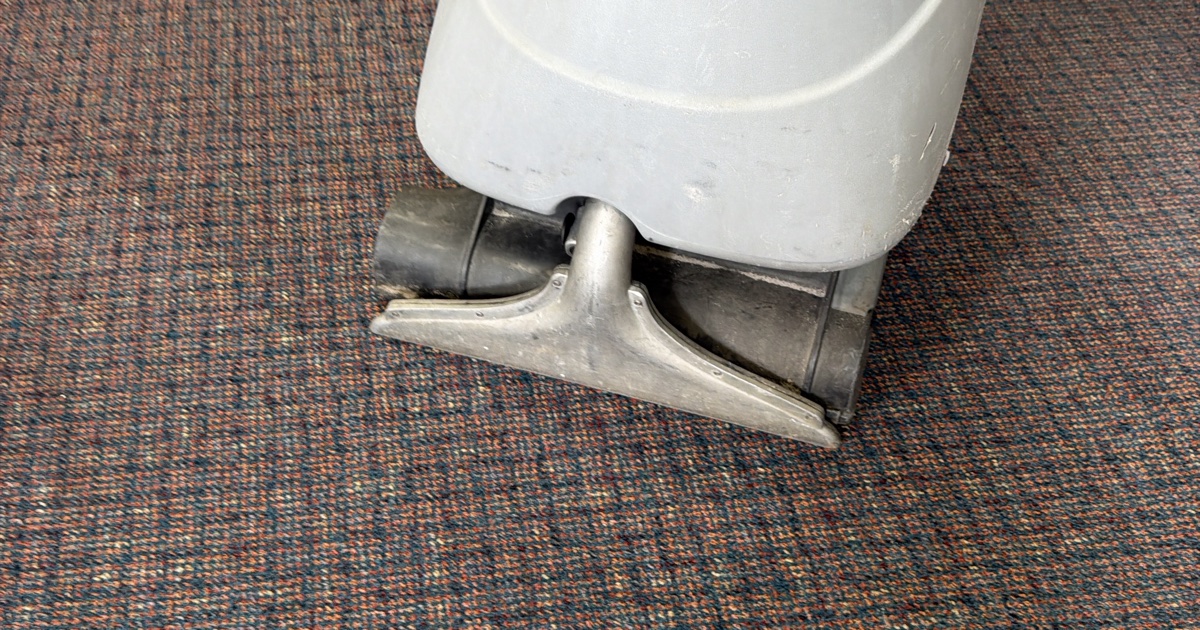
- Carpet steam cleaning (hot-water extraction) of offices, corridors and meeting rooms
- Hard floor machine scrubbing, or stripping and resealing where the floor has a sealed finish
- Upholstery and fabric chair steam cleaning
- Internal glass at height where safe access allows
- External windows, within safe access limits
- High-level dusting of ledges, vents and light fittings that can be safely reached
- Pressure cleaning of entrances, paths and external hard surfaces
Who does what: agree it before cleaning starts
Many complaints about office cleaning come from tasks nobody owned. Settle these in writing.
| Item | Decide |
|---|---|
| Desks and paperwork | Will staff clear desks? Cleaners shouldn't move personal items or papers |
| Keyboards, phones and monitors | Cleaned by the cleaner, or left to staff? |
| Dishes | Does anyone load the dishwasher or wash cups, or is that left to staff? |
| Fridge clear-outs | Who decides what is thrown out, and on which day? |
| Consumables | Supplied by the cleaner, or bought by you and restocked by the cleaner? |
| Waste streams | Which streams are separated (general, recycling, paper, organics), and where do they go? |
| Access | Keys, fobs, alarm codes, sign-in, and what happens when a cleaner leaves the site |
Turning the checklist into a scope of works
A checklist becomes a scope of works when it says what is cleaned, how often, when, and to what outcome. A good office cleaning scope includes:
- Every area, with the tasks and frequency for each
- Cleaning times, such as after hours, early morning or during the day
- Periodic works, listed with their frequency and the month they're due
- Inclusions and exclusions, such as consumables, external windows and work at height
- How quality is checked, how issues are raised, and how quickly they're fixed
With a clear scope, every supplier quotes on the same work, so quotes can be compared fairly. Our guide to what to ask a commercial cleaning contractor before you sign covers the questions to ask, and our guide to commercial cleaning costs in Gippsland explains what drives the price.
Common mistakes
- One frequency for the whole office. Washrooms and kitchens need more attention than meeting rooms. Set frequency per area.
- No periodic schedule. If carpet cleaning and floor care aren't scheduled, they tend not to happen.
- Unclear consumables. Say who supplies toilet paper, hand towel, soap and bin liners, and who restocks.
- Cluttered desks. Cleaners can't dust a desk covered in paperwork. A clear-desk policy makes daily cleaning more effective.
- No way to raise issues. Agree who to contact and how problems are logged and closed.
Frequently asked questions
How often should office toilets be cleaned?
In most offices, washrooms are cleaned at least daily on the days the office is open. Busy workplaces may need a second service during the day. The right frequency depends on how many people use them.
Should office cleaners clean keyboards and phones?
It's a matter of agreement. Some organisations prefer staff to look after their own equipment; others include it in the scope. Write the decision down so everyone knows.
What is periodic cleaning?
Periodic cleaning is deeper work done less often than routine cleaning, such as carpet steam cleaning, hard floor maintenance, high-level dusting and window cleaning. It is usually scheduled every six or twelve months and quoted separately.
Is after-hours office cleaning better than daytime cleaning?
After-hours or early-morning cleaning gives cleaners clear access and avoids disrupting staff. Daytime cleaning suits sites with restricted after-hours access or washrooms that need servicing during the day. Some offices use both.
How Brightest Property Services can help
Brightest Property Services provides commercial and office cleaning across Gippsland and the Latrobe Valley, from our base in Morwell.
Brightest Property Services is ISO 9001, ISO 14001 and ISO 45001 certified, holds $20M public liability cover and Victorian Labour Hire Licence VICLHL03732, and is WorkCover insured.
Brightest Property Services delivers periodical cleaning such as carpet steam cleaning, hard-floor machine scrubbing and cleaning of accessible internal and external glass, with project and periodical work documented in photo completion reports.
Depending on the site and service required, Brightest Property Services may prepare a quotation following a site visit or from sufficiently detailed information such as floor plans, photos, cleaning requirements and the required service frequency. The quotation should clearly identify the agreed cleaning scope and any relevant inclusions or exclusions.
Request a cleaning proposal or see our office cleaning service.
Sources
This guide is general information, not legal or safety advice. Check the current version of each source before relying on it.