
A warehouse doesn't stop for cleaning. Forklifts keep moving, docks keep cycling, and dust, packaging and spills build up faster than in an office. Good housekeeping keeps aisles clear, floors safe to walk and drive on, and amenities fit for the people who work there.
This checklist sets out the cleaning tasks most warehouses and light industrial sites need, grouped by how often they're usually done. Use it to review your current cleaning, brief a contractor, or build a written scope that every supplier can quote on the same basis.
Why warehouse cleaning is different
Cleaning an industrial site is a safety question before it is a cleaning question.
- Mobile plant. Cleaners work in the same space as forklifts, trucks and order pickers, so when and where they clean has to fit the site's traffic rules.
- Dust and debris. Pallets, shrink wrap, cardboard and tyre dust accumulate in aisles, racking bays and dock areas.
- Slips and trips. Spills, loose wrap and debris on the floor are hazards for both pedestrians and forklift operators.
- Working around plant. Cleaners clean around fixed plant, not on it, and stay out of guarded or isolated zones.
- Amenities. Toilets, change rooms and crib rooms are used hard across shifts, and they're the areas the workforce notices most.
Before cleaning starts: safety and access
Agree these before a cleaner sets foot on the floor:
- The site's traffic management plan, and how cleaners are separated from forklifts and other mobile plant
- Exclusion zones, pedestrian walkways and areas cleaners must not enter
- PPE required on site, such as hi-vis, safety footwear and any task-specific equipment
- Site induction, sign-in and emergency procedures
- Cleaning windows that fit shifts, deliveries and dispatch: after hours, between shifts, or during shutdowns
- What cleaners must not touch: plant, machinery, stock, guarded or isolated areas
- The heights cleaners will work to, and how anything above safely accessible heights will be assessed
- Safe work method statements, a site risk assessment and safety data sheets for every cleaning product brought on site
WorkSafe Victoria notes that a traffic management plan that separates forklifts from pedestrians can reduce the risk of forklift-related deaths and injuries. Cleaners are pedestrians too, so the cleaning roster should follow that plan.
Daily warehouse cleaning checklist
Amenities, change rooms and crib rooms
- Toilets, urinals, basins and tapware cleaned
- Showers and change room floors cleaned
- Soap, hand towel and toilet paper checked and restocked
- Crib room benches, tables, sinks and appliance exteriors cleaned
- Bins emptied and liners replaced
- Floors mopped
- Door handles, taps and switches wiped
Warehouse floor and work areas
- High-traffic aisles, pedestrian walkways and dock areas swept
- Loose shrink wrap, strapping, cardboard and debris picked up
- Bins and waste points emptied, with waste taken to the designated area
- Spills reported or cleaned up according to the site's spill procedure
Site offices
- Office bins emptied, kitchen cleaned and floors vacuumed or mopped
- High-touch points wiped
Weekly warehouse cleaning checklist
- Aisle and dock floors machine scrubbed
- Racking bay floors swept where accessible
- Loading bay and dock levellers swept clear of debris
- Accessible ledges, handrails, doors and switches dusted or wiped
- Amenity walls, partitions and doors wiped down
- Bin store and waste point areas cleaned
- Entrance matting cleaned
- External hardstand and entry areas swept
Monthly and quarterly tasks
- Workshop and production floors degreased and machine scrubbed
- Floor line markings checked for visibility after cleaning, with any problems reported to the site
- Accessible racking uprights and lower beams dusted
- Under and behind fixed benches and equipment cleaned, without touching plant
- Amenities deep cleaned: grout, behind fixtures, vents and lockers
- Crib room fridge and microwave cleaned inside, once staff have emptied them
- Office carpets and hard floors given a detail clean
Periodic and shutdown cleaning
These tasks need more time, equipment or an empty floor, so they're usually quoted separately and scheduled into quiet periods or shutdowns.
- Full warehouse floor scrub, including racking bays once stock has been moved
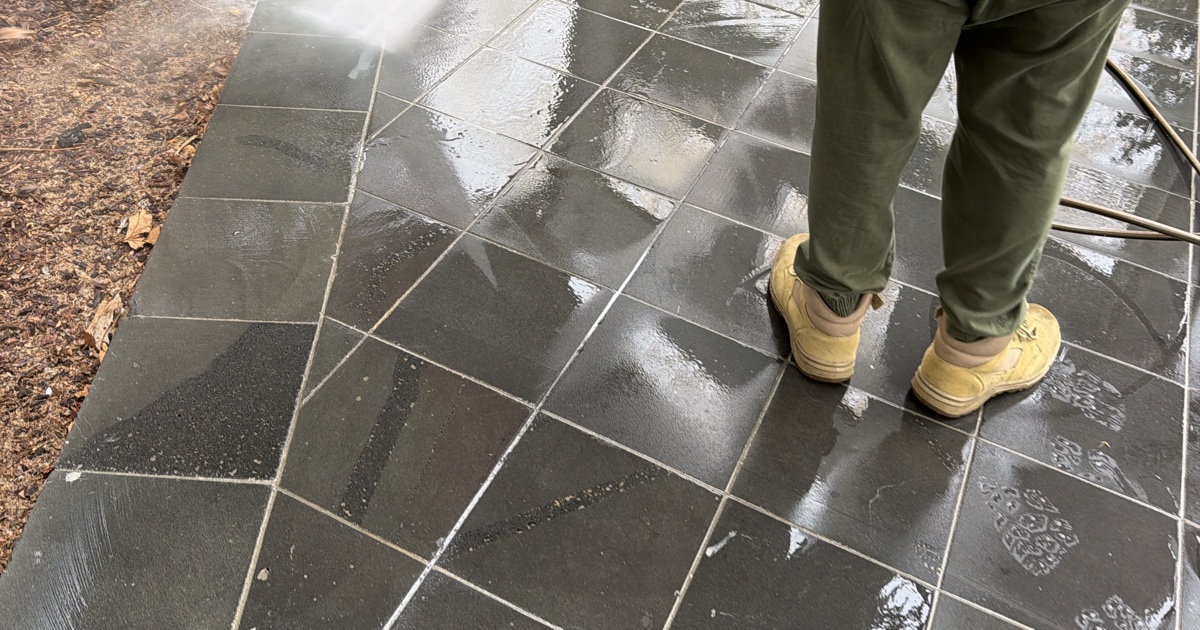
- Pressure cleaning of external hardstand, aprons, entries and bin stores where the surface allows
- Internal and external glass cleaned within safe access limits
- Office carpet hot-water extraction
- High-level cleaning (racking tops, mezzanines, high ledges), assessed case by case for safe access and equipment
Warehouse floor cleaning: how it is usually done
Warehouse floors take the most wear, and they affect both safety and how the site looks to visitors and auditors.
- Sweep first. Removing dust and debris before wet cleaning stops it turning into slurry. Larger sites typically use a mechanical sweeper.
- Scrub, don't just mop. Walk-behind or ride-on scrubbers wash and recover the water in one pass, so floors dry faster and residue is not left behind.
- Degrease where needed. Workshop and dock areas often need degreasing, with a product suited to the floor and the soil.
- Keep markings visible. Clean floors make pedestrian walkways and exclusion-zone markings easier to see.
- Manage wet floors. Use signage, clean in sections, and coordinate with forklift traffic so nobody drives on a wet floor.
Who does what: agree it in writing
| Item | Decide |
|---|---|
| Spills | Who responds, using which spill kit and procedure, and which spills are site-only (for example, dangerous goods) |
| Waste streams | Who handles pallets, cardboard, shrink wrap, general waste and recycling, and where each goes |
| Racking bays | When stock will be moved so bay floors can be cleaned |
| Plant and machinery | Cleaners clean around plant, not on it. Any cleaning of plant itself needs its own scope and isolation by the site |
| Consumables | Supplied by the cleaner, or bought by the site and restocked by the cleaner |
| Access and timing | Cleaning windows, after-hours access, alarms and sign-in |
What sits outside routine warehouse cleaning
Some industrial work is specialist and should be scoped separately from a routine cleaning program, usually by contractors with specific competencies and equipment. Examples include confined-space entry, tank, silo or pit cleaning, vacuum-truck work, high-pressure jetting of plant or process equipment, and cleaning that involves dangerous goods or live plant.
If your site needs any of these, list them separately so quotes for routine cleaning stay comparable.
Common mistakes
- Cleaning during peak forklift traffic. Schedule floor work for quiet periods and follow the traffic management plan.
- Mopping large floors. Mops spread dirty water. Machine scrubbing is faster and leaves floors cleaner and drier.
- Never cleaning under the racking. Bay floors collect debris and dust. Plan stock moves so they can be cleaned periodically.
- Unclear spill responsibility. Decide in advance which spills the cleaner deals with and which need the site's own response.
- Treating amenities as an afterthought. Toilets and crib rooms used across shifts often need cleaning more than once a day.
Frequently asked questions
How often should a warehouse be cleaned?
It depends on activity, shifts and headcount. Amenities and crib rooms are usually cleaned daily, high-traffic floors swept daily and scrubbed weekly, and racking bays and external areas cleaned on a monthly, quarterly or shutdown cycle. Set the frequency per area in the scope.
What is the best way to clean a warehouse floor?
Sweep to remove dust and debris, then machine scrub to wash and recover the water in one pass. Degrease workshop and dock areas as needed, and keep wet areas signed and clear of forklift traffic until they are dry.
Can cleaning happen while forklifts are operating?
It can, if the cleaning roster follows the site's traffic management plan and cleaners are kept separated from forklifts. Floor scrubbing is usually best scheduled after hours, between shifts or during shutdowns.
Who cleans up spills in a warehouse?
That depends on the spill and the site's procedures. A cleaner can deal with routine spills of water or general products. Spills of oils, chemicals or dangerous goods should follow the site's own spill response procedure. Agree the boundary in writing.
How Brightest Property Services can help
Brightest Property Services provides industrial and warehouse cleaning for warehouses, workshops and light manufacturing sites across Gippsland and the Latrobe Valley, from our base in Morwell.
Brightest Property Services is ISO 9001, ISO 14001 and ISO 45001 certified, holds $20M public liability cover and Victorian Labour Hire Licence VICLHL03732, and is WorkCover insured.
Brightest Property Services delivers periodical cleaning such as carpet steam cleaning, hard-floor machine scrubbing and cleaning of accessible internal and external glass, with project and periodical work documented in photo completion reports. Specialist process work such as confined-space entry, tank cleaning or jetting of plant is assessed separately rather than offered as part of a routine program.
Depending on the site and service required, Brightest Property Services may prepare a quotation following a site visit or from sufficiently detailed information such as floor plans, photos, cleaning requirements and the required service frequency. The quotation should clearly identify the agreed cleaning scope and any relevant inclusions or exclusions.
Request an industrial cleaning proposal or see our industrial cleaning service.
Sources
This guide is general information, not legal or safety advice. Check the current version of each source before relying on it.
- WorkSafe Victoria — Forklifts
- WorkSafe Victoria — Injury hotspots: Warehousing and storage